For my first, finest, and favorite teacher- Mama (a.k.a. Margaret/Marge)- on her New Year’s Birthday

“This crying stuff…that must come from your Daddy’s side of the family, because you don’t get that from me or mine. You’re gonna just have to get past this, dust yourself off, get up, and keep on going.” These words are ones which I have heard all too often in some iteration from my mother, Margaret. I can’t think of any expression to better demonstrate her “pick yourself up by your bootstraps” belief system.

Many people can categorize their mothers in one of two broad categories: they either describe her as super-sweet, domestic, nurturing to a fault, and maybe even a pushover, or they describe her as strict, career-focused, abrasive, and possibly aloof. I don’t think any of these terms would accurately describe the woman who has graced this earth (dare I say?) long enough to claim Octogenarian status. I can confidently say that my mother is tough, nurturing, petty (when it’s in order), intelligent, highly creative, quick-witted, determined, somewhat stubborn, loving, kind-hearted, feminine, quicker-to-anger than she will ever admit, pretty, astute, regal, articulate, proud, generous, thoughtful, dynamic, and gregarious.

Mama did not come by these characteristics easily, and she has earned every single one during her years. Her humble beginnings were mired in the fact that her mother died just 4 days after she turned 7 years old (on New Year’s Day), leaving my mother as the oldest of 3, with a father who already struggled to make ends meet as a laborer.
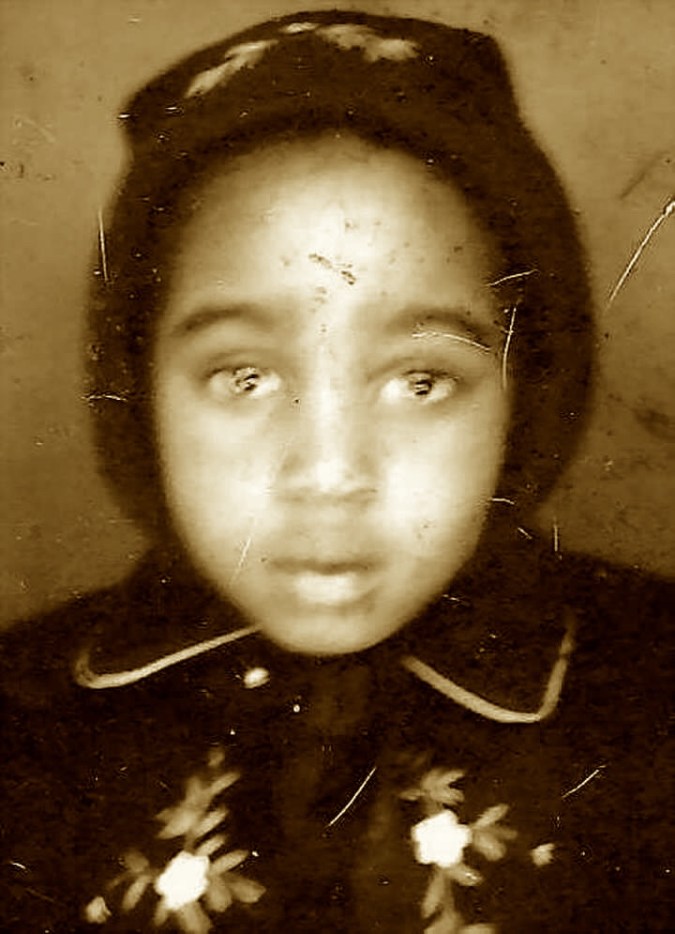
My Mother, During Childhood

Her early years would be spent moving from Memphis to New Jersey to live with her maternal grandmother, leaving by train for the unknown just days after laying her mother to eternal rest. While there, her beloved Aunt Hattie and her young Uncle Booker worked multiple jobs to help take care of their deceased sister’s children along with their mother; Mama would be forever grateful to this favorite Uncle Booker, and pass this love and adoration for him down to her own children.
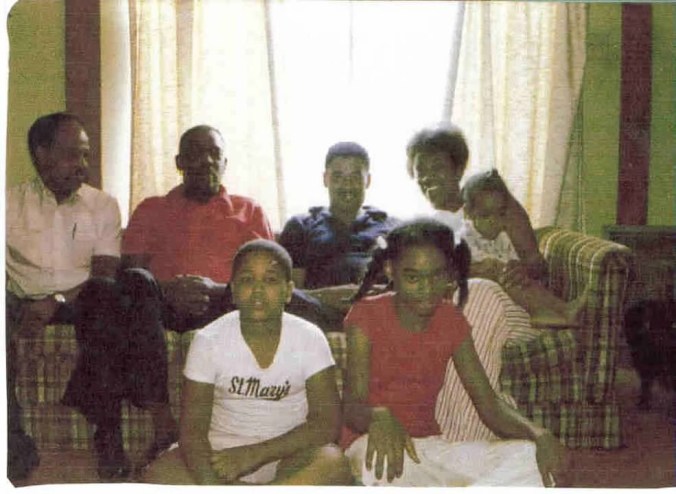
Back Row: Cousin Sherman, Mama’s Father (Odell Sr), Uncle Booker, Mama, & Me (on her lap); Front Row: Cousin Tyrone (Uncle Booker’s Son), and my sister, Ingrid

Unfortunately, because of the times, resources, and ages of different relatives, Mama and her siblings would move to several different cities to live with several different family members over their formative years. Over time, Mama became familiar with parts of New Jersey, Philadelphia, Gary, Indiana, and Forrest City, Arkansas before she and my Uncle Odell moved back to Memphis when their father remarried. They would become separated from my Aunt Marie, who would end up staying with a relative who chose to raise her in Gary permanently. Back in Memphis, my mother and her brother became part of a blended family, with a “his”, “hers”, and “theirs” of children with their father and stepmother. I would be remiss if I spoke on my mother’s upbringing and didn’t mention that she will always love her family’s school, Manassas High, and she’ll forever be proud to be an HBCU grad of Lemoyne (now Lemoyne-Owen)!
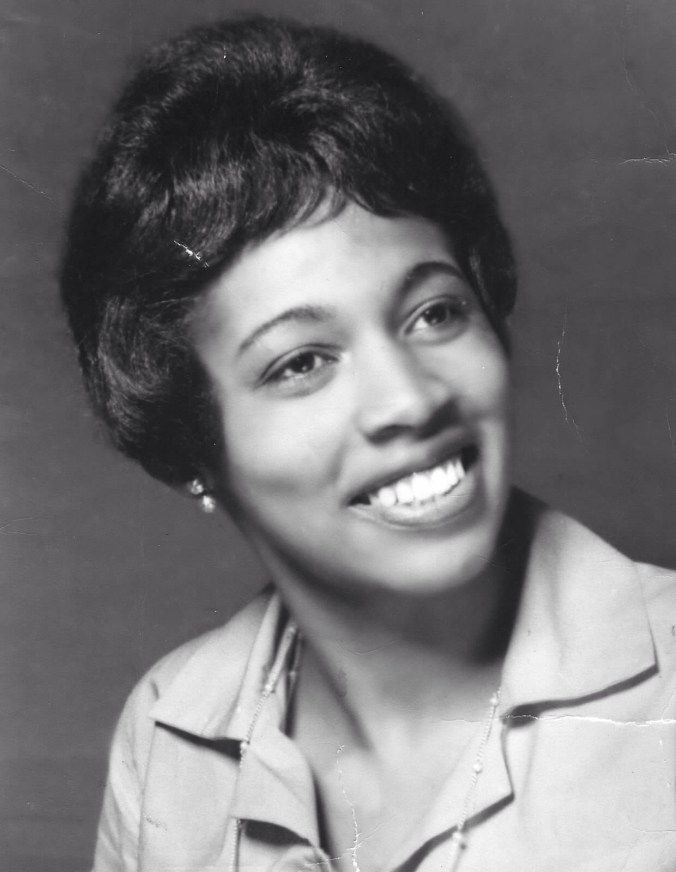
Mama, in younger years

Because my mother lost her mother so early, we will never know if she gets her “personality plus” attributes from her mother, father, or both. My Granddaddy Odell cannot possibly be contained within the context of a post about my mother, so I will post about him for his birthday this upcoming February. What I can say is that we did have the good fortune to know Mama’s aunts from both sides of her family, and because she shares many of their character traits, it’s no wonder that she has never been accused of being boring! Between Aunt Clara, who could talk longer than the day is long; Aunt Ruthie, who stayed spry long beyond her elderly years; and Aunt Naomi, who had men vying to be her next husband up until her last elderly days, she didn’t lack strong female idols. She was also strongly influenced by her grandmothers and even more bold women who were progressive before their time. These women taught her how to be independent, how to stand on her own two feet, and how to manage money responsibly, in the context of both being single and as a married woman.
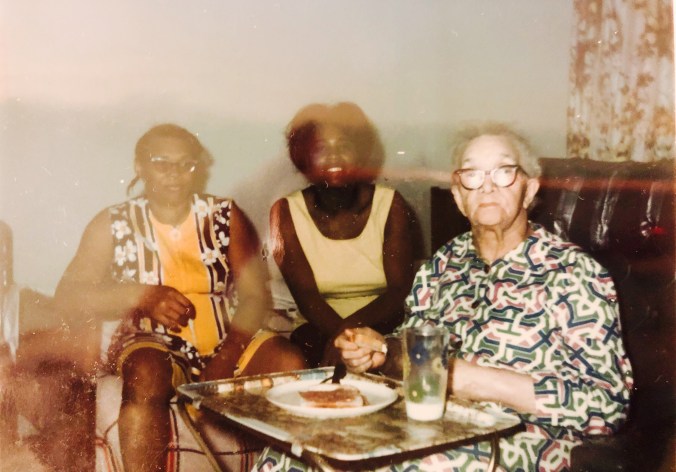
Mama’s maternal Aunt Naomi, Mama, and her maternal Grandmother Helen

Mama was typically excited and a lively contrast to my more subdued father, who was the country to her city mouse. I love to hear Mama talk about the major adjustment it was for her, a bona fide North Memphis girl, to move miles across the county to start a new life with my father on this quiet and remote farm, his birthplace, where animals made strange noises in the dark cloak of night! But she did just that, and naturally charmed the daylights out of her mother-in-law and father-in-law, who lived down the street on that same farm, in the process. On that farm, she would grow comfortable, raise a family, and eventually say goodbye to and bury the husband who took her from the city to be there with him in the first place.
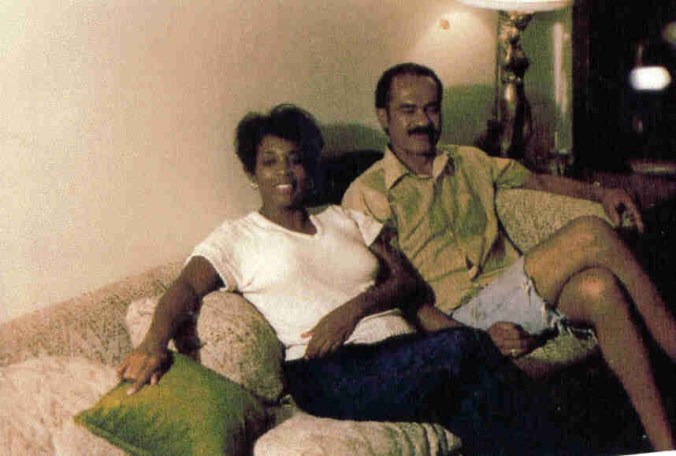
Mama and Daddy
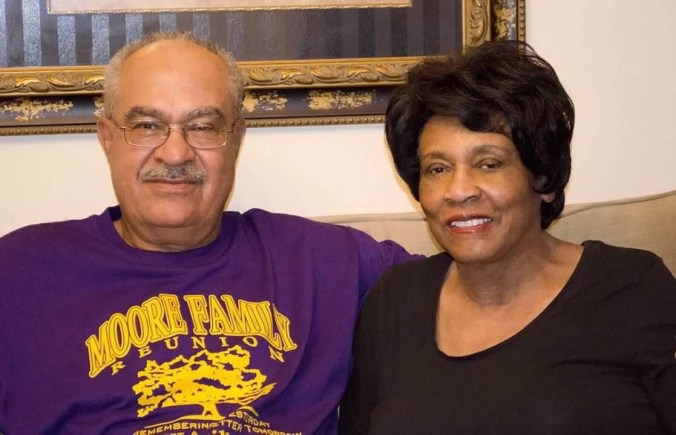
Mama and Daddy, After 40+ years of marriage

Prior to meeting my father and after graduating from college, Mama began her life’s calling as a teacher. (Years later, she would earn a Master’s degree remotely with distance learning…LONG before it was vogue, and while working full-time, married, and raising children.) Her father was so very proud to tell everyone that his daughter was a teacher! He made it a point to always tell her that nothing was more important than getting her education; this was undoubtedly very valuable to him, as he had never had the opportunity for significant education himself. In the beginning of her career, she taught a couple of different grades, but she quickly found that her heart would always belong to 1st graders. Over 20 years after retiring, she still lights up when she hears of a child who is 6 years old, because these little kindergarten transitioners are her people; she has said they are “sponges” who are at the ready to “soak up” knowledge. The one slight downside to having a mother who has been passionate about teaching, though, is that she never turns the ‘Educator’ mode off. She will deny it, but I’m pretty sure she was correcting our diction when my sister and I were each still in kindergarten; our father was not helpful in this regard, serving as a background grammar police cheerleader, advising us not to always start sentences with “but” and “like” 😐. Nevertheless, to this day, I have heard few people regale others with the joy their profession brings them as Mama does when she describes how it feels to watch a child’s “lightbulb come on” when teaching them a concept that they finally grasp. Everyone should be so fortunate to love what they spend most of their lives doing while serving others in a profession.
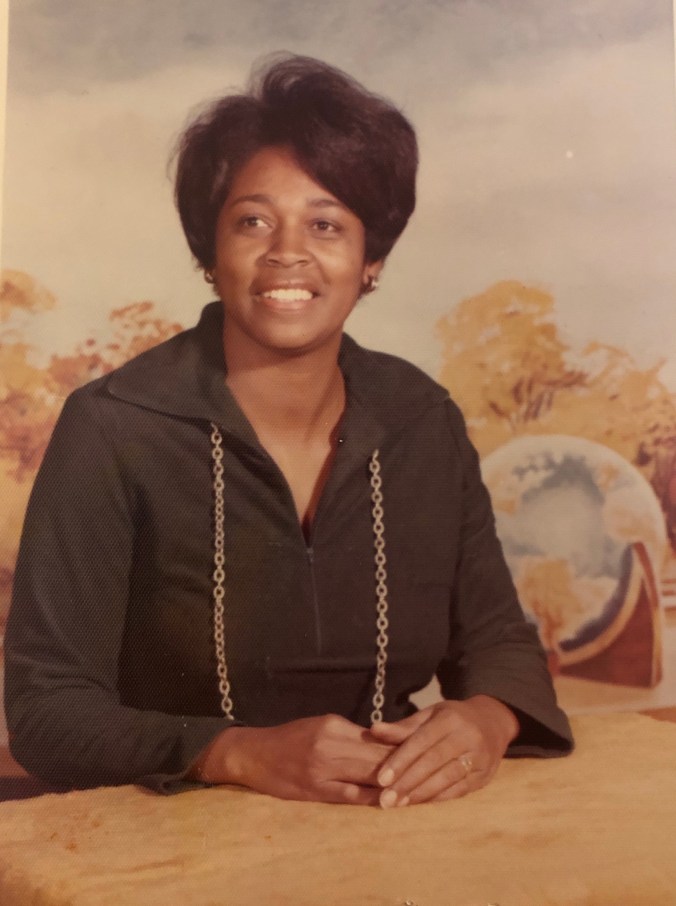
Margaret, back in her teaching heyday

My earliest memory of Mama, as my sister Ingrid and I affectionately call her, was of a time when I was in a walker (my pediatrician-heart aches a bit over this – lol). It’s actually my very first memory, and I recall that it was when she welcomed my paternal great-uncle, Uncle Edward, into the house at the kitchen door, and they were both so…LOUD! He was a very lively personality, was likely hard of hearing at the time, and the two of them together would have naturally been very…spirited, so it’s no wonder that the mere startle of their jovial greeting has remained as my first vividly clear memory.
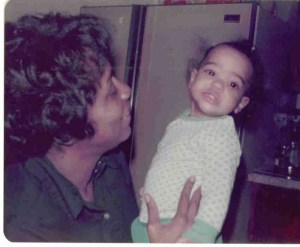
Mama and Me

An 80s-era family pic

However, as dynamic as she has been on her own accord, there has never been and never will be more flourish in movements, pep in her step, or brightness in Mama’s beautiful smile than when she was around her siblings during her middle-aged years of the 1980s. Some of my fondest childhood memories are from summers visiting my aunts on the South Side of Chicago, watching as Mama and Aunt Marie pushed each other aside, arms akimbo, proudly shoving their bosom forward and proclaiming that they had bigger busts than their sister. This was a real thing-LOL! Only when we were in Chicago would we find another person who HAD to be Mama’s sister, because the only other person we had ever met who would, like our mother, routinely start singing what would be normal conversation for anyone else was our Aunt Marie. Better yet, nothing compared to late night shopping sprees at Cub Foods with Aunt Ruby (why were we buying food when we didn’t live there?) and watching all the Swift siblings sing and dance to Barry White, Teddy Pendergrass, and the best of Motown.
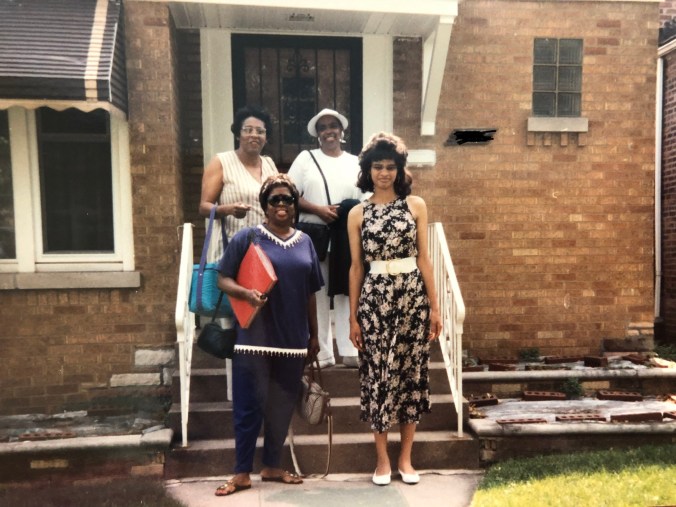
One of our many visits to the South Side to spend time with my mom and her sisters

Back Row: Mama and Aunt Marie; Front Row: Aunt Ruby and my sister, Ingrid

My Uncle Odell (Jr) actually had a video recorder back in the day, so there are videos of get-togethers showcasing their father and other family in impromptu family fashion shows. One sound that I hope to never forget in this lifetime is that of the thundering, ebullient laughter of Mama, Granddaddy Odell, her siblings, and our entire Swift crew as they enjoyed the few, precious times they got to spend quality time together.
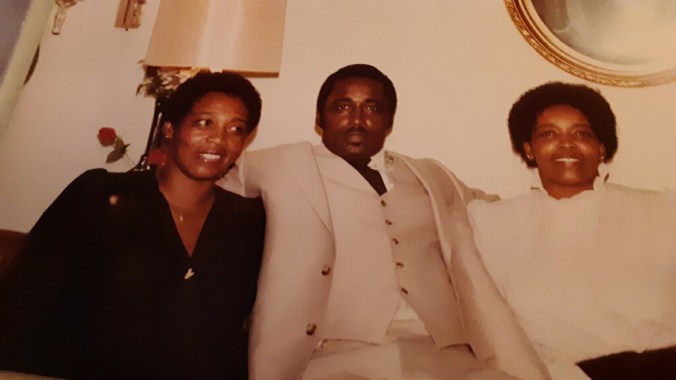
Mama, Uncle Odell, and Aunt Marie circa 1980s
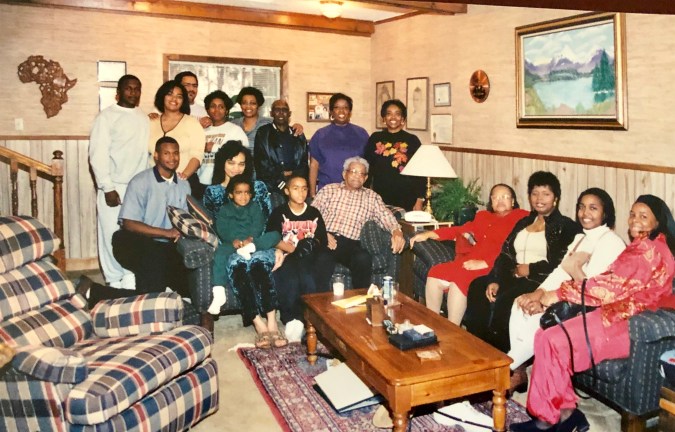
At home with Mama, her siblings, uncles, aunt, and multiple Swift Family members

Though my mom can cut a rug with her siblings, she has found many ways to make life as interesting as possible for her own little family, as well. Thanks to her, my childhood was replete with Saturdays for hustling and bustling from ballet to piano/organ lessons to Sears shopping excursions. With a mother who was the quintessential first-grade teacher who had to have the best items for her students, I knew what it was like to go shopping with the actual teacher in those classroom supply stores! She was the one who would create the most creative treats for our Girl Scout troops when it was her turn to provide refreshments, long before Pinterest was even a consideration. If you are going to roast someone or need a person to create a last-minute speech to give at someone’s retirement event (as in, on a napkin while actually attending said dinner celebration), Margaret is the one to ask! When I was growing up, she was known for giving out large peppermint candy sticks to my kid cousins for Christmas, and also for coordinating the cousins’ annual summer trips to the celebrated Memphis Zoo. She sang ever-so-melodiously in our church choir before she eventually would have severe arthritis leading to spinal cord injury and permanent impairment of driving and prolonged standing abilities. I wish I had half the voice and singing talent she has; American Idol’s Susan Boyle has nothing on her rendition of ‘How Great Thou Art’.
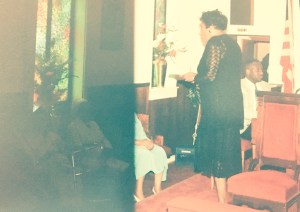
Mama, presenting and/or preparing to sing something to the Mother’s Board in church

When we went to DisneyWorld for the first time and I was afraid to get on the roller coaster, she did an on-the-spot commercial about how much fun it was going to be!
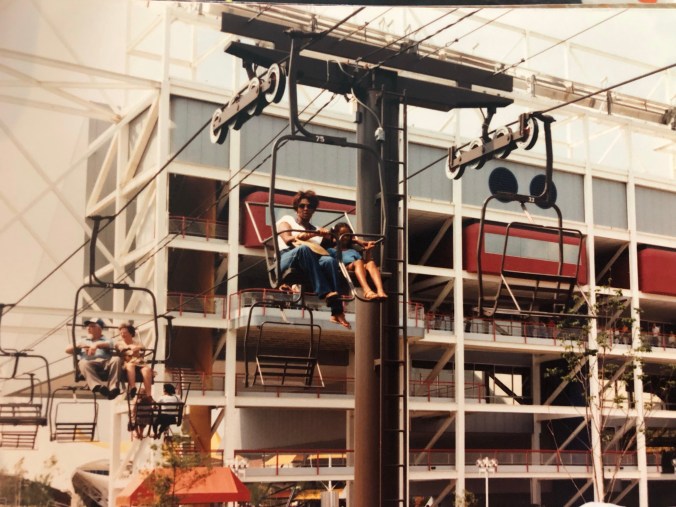
Riding an amusement park ride with Mama

I could go on and on, but it’s probably clear that my mother has always possessed a zest for enjoying the fun aspects of life and embracing those, instead of dwelling in times of sadness and defeat.
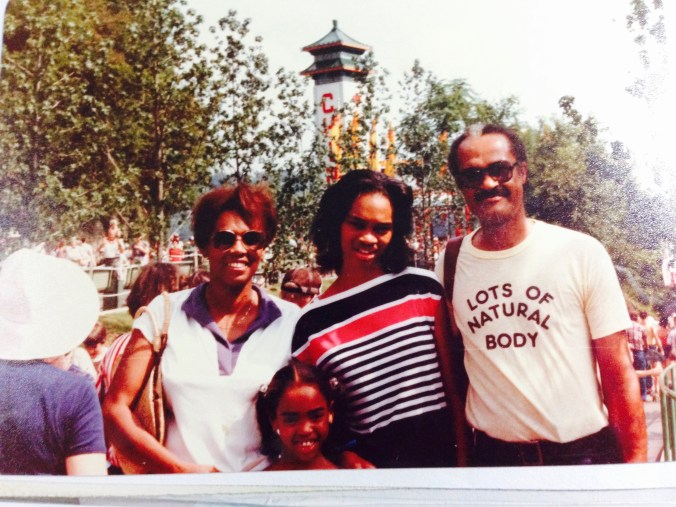
A Favorite Pic of our Family at the World’s Fair in Knoxville

I fully believe that this is born of having to persevere in the face of losing her mother at an early age, having a strict father who didn’t take any crap (he would use another word 🙂 ), and being guided by strong women who didn’t espouse a ‘woe is me’ weakness-riddled agenda or feeble feminine mindset that screamed of wanting to be saved. Mama has had the spirit to prevail, despite the adversity of being born into poverty, the tragic childhood death of her mom, and the trials and tribulations of life as a black woman in the South enduring Jim Crow, the Civil Rights Movement, and beyond into the 21st century. Even when I’m happy to take a break from being strong and triumphing over hardships, I’m grateful that one of her best gifts to me is the legacy of grit and determination that she received from previous generations of our family.

Perhaps one of the greatest delights of my adult life has been watching my mother enjoy being a grandmother. She is aware that she feels my son can do no wrong, and that he has her wrapped around his finger. The funniest thing is that she LOVED raising girls; she said she relished in dressing us up like “living dolls”, and this made me dream of the day when I would have my own little real-girl doll to dress up!
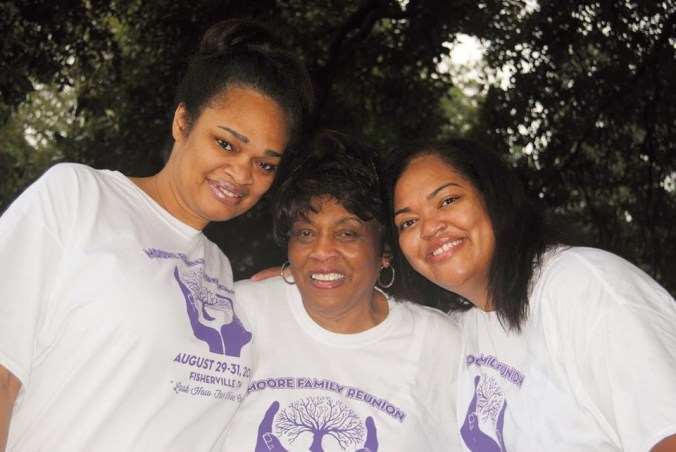
Mama and her Grown Girl Dolls 🙂

However, neither of us could have fathomed the pure joy of a boy, and the fun that only a child who is willing to risk limb and life to run, jump, and vault over random objects could bring. Mama is a natural at being a doting “Mom Mom”, as she has chosen to be called. Ironically, though I can’t describe Mama using the words in the broad categories mentioned at the beginning of this post, I can do so when referring to her as a grandmother. Without a doubt, Mama as Mom Mom is super-sweet, domestic, nurturing to a fault, and yes, even a pushover; in 80-plus years, she has earned the right to be❤️.
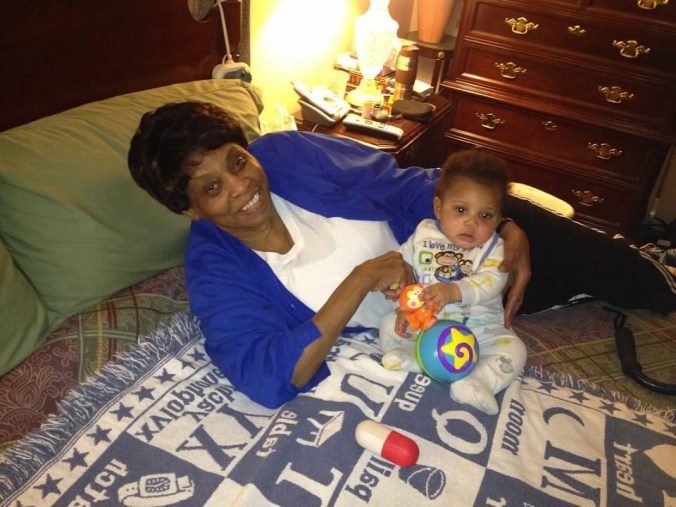
Mom Mom and the Apple of her Eye
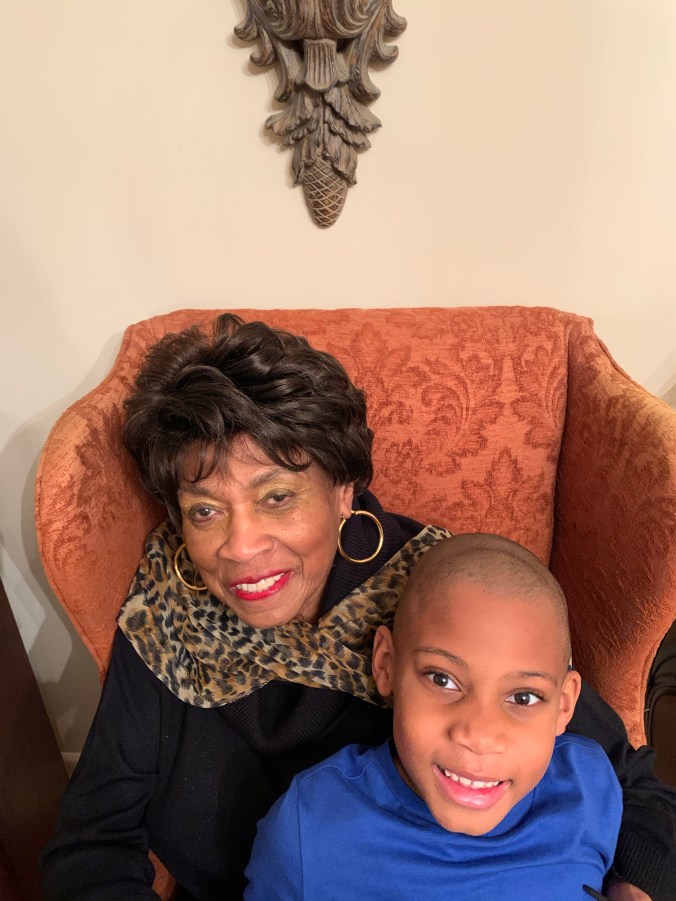
Mom Mom and Dominic, on her birthday, January 1st, 2020
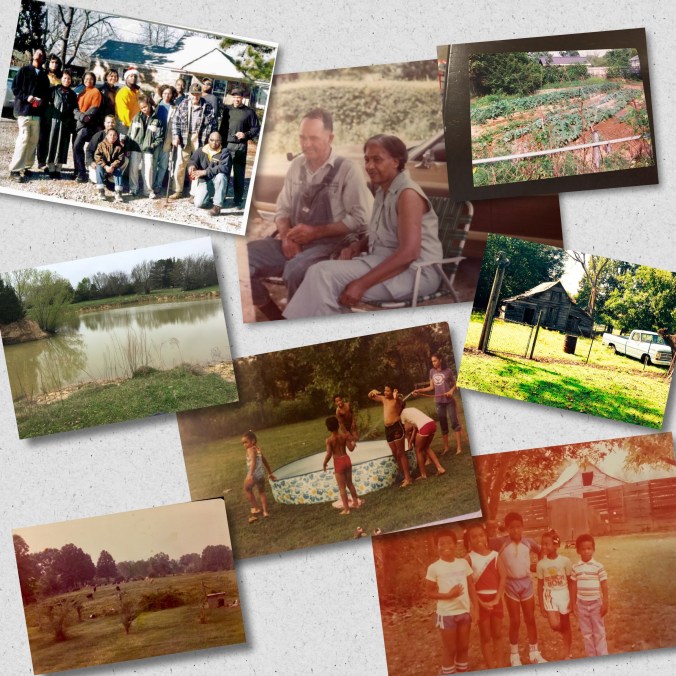
Lightning Bugs and Being Country at ❤️

[Caption: Various pictures on the Moore Family Farm with Grandparents and their Grandchildren, etc.]

I suppose I’ve always liked writing to some extent, and now find it to be somewhat therapeutic to express myself through this particular art form.  I also happen to have a significant love for music and pictures, but more to come in an upcoming blog post on the importance of photographs soon.

Lately, those who I’ve loved and lost have been on my mind.  I figured it might be time to pull out a piece that I wrote when I had just finished my first year of college and had come home for a bit before taking off for some nerdly activity for the summer.  I wrote this piece, “Lightning Bugs”, after visiting with my paternal Grandfather, the subject of one of my previous blog posts; he remains one of my greatest influences.  As I read this 25 years after I wrote it, I laugh at how dramatic I am.  However, much of the sentiment is the same.  Unfortunately, the fate of those mentioned is not.  My Grandfather has since passed away.  And my cousin Kevin, born the same year as I, has been missed for almost 20 years.  In fact, this story was printed and placed in his funeral program, and I had planned to read it, but was not in an emotional state to do so. Instead, my father read it for me.  I remember that his voice broke when he read about my grandmother, his mother, being in Heaven.  And now, ironically, he is there with her.  So I am embedding this story within this post in tribute to all those mentioned who my family has loved and lost:

“Lightning Bugs”

by Gina M. Moore

written: Thursday, 5/12/94

         As I was leaving the other night, Grandfather commented on the lightning bugs dotting the dark black skies.  I looked on and smiled, slightly in recognition, slightly in awe.  Usually I would have said “goodbye” and carelessly driven away, but this night was so different.  I walked out to the car and before I sank in, I stopped.  Something about that night made me take a slow, deliberate gaze around the farmland surrounding me.

         Suddenly I could remember a time not too long ago. A time when my cousins and I could not wait for this season…Summer!  Climbing trees, picking mulberries, riding bicycles, catching lightning bugs.  It was a happy time; ironically, it brought such sadness now.  It aroused a heart-wrenching yearning, and I knew it was for nothing but yesteryear.

         I had known for a while that I’d always have those memories.  The memory of Kevin doing “dangerous stunts” on an old tree rope.  The many times Chris would ‘pop wheelies’ on his green BMX bike.  Tiffani jumping off of old, rickety benches.  The first time Vincent reached the top of the old Magnolia tree.  My scoring a home-run in our many kickball games.  And there were so many more.  The sweet taste of honeysuckle, longing to play with our older cousins, our grandmother’s fork-mashed peanut butter cookies, helping Grandfather plant corn.

         Something significant happened on that night.  For the first time in my life, the memories came flooding back and I acknowledged the fact that I can never go back to that time again.  I can reminisce and try to resurrect it, but that time is gone forever.  Though it was only a decade ago, it will never be again.

         Now, I’d be lucky to see all of my cousins together once in a year.  And if we were reunited, playing outside would not be on our priority list.  Climbing trees, swinging from ropes, and riding BMXs have been replaced by sports clubs and track practices for the state championship.  Our grandmother is baking cookies in Heaven and Grandfather doesn’t plant much of anything besides his bottom anymore.

         Though nostalgia does bring joy, it brings disappointment, also.  When I reminisce, I am reminded of a quote by one of my classmates in our high school senior yearbook: “I always knew that when I looked back on my tears, there would be laughter, but I never knew that when I looked back on my laughter, there would be tears.”

         Back then, we had little competitions to see which one of us could catch the most lightning bugs in a jar.  I never could catch as many as Kevin or Chris, a reality that almost always upset me.  I look back and laugh at those times.  But then again, I would do just about anything to have them tease me about my three little lightning bugs one more time.

I learned something about lightning bugs today, because now I am responsible for helping to shape the mind and thinking of a little person who depends on me, so I occasionally make myself research a little bit more than my pre-motherly self might have done – lol.  Lightning bugs, a.k.a. fireflies, live for 1-2 years from egg to adult.  However, they only put on their amazing light show for 2 months.  That’s it!   It doesn’t even last as long as the summer break we used to have in which we would compete in catching them! How remarkable it is to me that these little creatures who live for just a blip of time have had such an impression on memories of my childhood. More importantly, these bugs just do what they do, presumably without worrying about the fact that they are only going to be here for a tiny bit of time.

This  reminds me that time stands still for nobody and for nothing.  It inspires me to be grateful for these memories, to enjoy life each and every day, to not only tell people you are thankful for them, but to show them you love them with your actions. Today, I’m grateful that resurrecting this story has not only given me the chance to remember my loved ones who’ve transitioned, but it has also taught me to be more like the lightning bug.  From now on, I’m going to try just a little bit harder every day to not worry about when my light is going to be snuffed out; I’m going to focus more on showing up and dazzling the skies with all I’ve got.

On Being a Sickle Cell Doc

Ten Redefined Sickle

September is Sickle Cell Awareness Month, and it’s also the month 8 years ago when I was given the privilege of starting to care for a group of people who will always be very close to my heart; that group is composed of people living with sickle cell disease. Given the significance of the month, I’m reflecting a bit on my experience as a sickle cell doctor at the Forefront, University of Chicago Medicine.

Me: “GET OUT! I have like 37% Hemoglobin S blood in my body right now? I’ve just been walking around with that all this time and didn’t know? WOW!”

My physician: “Yes. You seem particularly excited about this.”

Me: “Well, yes. You know I’m a Sickle Cell doctor. This is what I do all day, talk about sickle cell. For me to just randomly find out that I have sickle cell trait is kind of a big deal.”

And so it goes that I learned that I had sickle cell trait, joining the 1 in 12 Americans and 8% of Black Americans with this finding, as well.  I then proceeded to proclaim that I would now have a perfectly reasonable excuse for avoiding skiing and scuba-diving, and said in jest that I would have to think long and hard before I would consider completing another half-marathon.

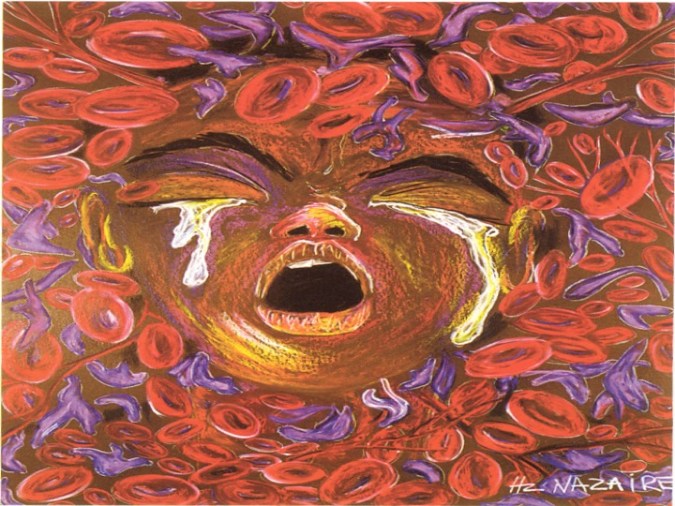
The difference for me from my patients, however, was that I had the luxury of talking about simply possessing the trait that would not have major implications for my life; at no point was I ever going to know the devastating pain, the life-altering complications, or the psychosocial anguish of the stigma associated with sickle cell disease.  That pain is severe and comparable to cancer pain, and is recurrent, chronic, and disabling for most people living with sickle cell disease.  The picture at the top of this post is called ‘Ten Redefined’ and is a graphic representation of what a 10 out of 10 on the pain scale feels like for a patient with sickle cell disease. This painting was done by an artist with sickle cell disease, Hertz Nazaire.

Though there were some aspects of my role as a director of a sickle cell program that I fully anticipated learning, I had no idea how much the experience would not only change my interactions with patients, but also provide perspective about health disparities, healthcare, and my general career path as a whole.  In medical training, we are forced to contend with learning everything there is to know about the human body and physiologic processes and then, what happens in the seemingly endless various pathological states; so it is easy to get caught up in the science of medical care during rigorous learning.  What most of us hopefully strive to do by the end of residency training is to start to incorporate the art of medical care and humanism into what we provide at the bedside.  However, there are some patients who have multiple chronic or complex conditions that are so complicated that even ongoing research and established standards of care have precluded finding options for treatment that are particularly satisfactory for patients or providers alike, and this sometimes creates tension between the art and science of medical care and with the humanism for which we strive. And, in this area of tension, is exactly where sickle cell disease and those living with it exist. And that aforementioned explanation is what I needed to create for why there is bias against people living with sickle cell disease from the medical community.

When I started my journey into the world of dedicated sickle cell care, I felt I had gained pretty significant experiences from my background.  I had grown up on a farm and attended a historically black undergrad (#FiskForever) and med school (#MeharryMade), and was most certainly aware of the plight of the underserved from a variety of experiences. I had taken care of patients who had little access to healthcare or resources to address medical concerns until they were uncontrolled or had proven nearly fatal.  Anyone needing a crash course on the impact of the social determinants of health can access one any day by taking a walk down Jefferson Street between Tennessee State University, Meharry, and Fisk in North Nashville and observing the environment; however, given the economic boom Nashville is undergoing, gentrification may soon extinguish this said crash course, but I digress.  I had then trained in Cincinnati in both Internal Medicine and Pediatrics and spent 2 years in inner city DC as well as 3 more years back home in Memphis in Orange Mound, leading a clinic in one of the most impoverished and under-resourced areas in the city.  What I had learned in those practice experiences, though, was that people will invest in themselves, their communities, and in the doctor-patient relationship if you are willing to do the same.  I had also learned that people are so much more than their past medical histories, their med lists, and even their social and family histories.  Every person has a story, and in that story is woven these social determinants.  What is now very plausible to me is this scenario for a patient: a lack of education because they lived in a dangerous neighborhood and couldn’t get to school without being accosted by gang members to join them; all of these issues feed into poor employment, lack of financial resources, and these issues marry living in food deserts and lead to having people with poor options buying salty chips as meal options when they already can’t afford to pay for meds for hypertension and they are dealing with PTSD from adverse childhood experiences, so they are self-medicating with nicotine and alcohol.  I thought I had it all figured out when I wandered into Sickle Cell World, but I only knew the tip of the iceberg…

What I would learn from my sickle cell patients is that, once they were no longer children and could advocate for themselves as adults by requesting pain medications based on 18, 20, 30, 40 years of living with a chronic, painful, debilitating disease and knowing what works to help to reduce (most often not alleviate) that pain, they would be labeled as a “drug seeker.”  Imagine if you expressed that you had trouble walking and were in excruciating pain, and people dressed in scrubs and white coats who are supposed to care about people crying out in agony said you were “faking it” because you would intermittently fall asleep amid requests for pain medications; what isn’t taken into account is, having been up all night in pain and missing sleep during pain crises, meds used for treatment cause severe drowsiness and somnolence. And what was most hurtful to hear from my sickle cell patients was that nobody was ever going to care about them because their skin was black.  It’s hard to argue with people who are telling the truth.  This is not the place to delve into the disproportionate and historical lack of federal funding for sickle cell disease as a more prevalent genetic disease affecting blacks than that provided to less prevalent genetic diseases affecting non-blacks, but one cannot possibly talk about sickle cell disease without addressing the inherent bias against its sufferers due to race, when racism is a foundational issue in this country.  I recently attended a health equity conference in which someone said that sickle cell disease is really the prototypical health disparity.  This perfectly summarizes my thoughts about being a sickle cell doc, and what this disease means in terms of race and health disparities in America.

On the flip side, however, I would learn that you don’t have to be black to care about people living with a “black person’s disease.”  I was very fortunate to have walked into a program that had been started by a former hospitalist at University of Chicago who saw a role for a care model that could address some of the needs for the sickle cell population on an outpatient basis and therefore, get to the “triple aim” and address not only the experience and quality of care for the patient, but also the cost of that care to the system as a whole.  What was that physician’s race?  White.  In fact, what was the race of the nurse practitioner I joined to take over for that physician, as well as the social worker who worked with them? Also white.  And the same goes for the nurse practitioner I eventually hired when our original NP left, as well as the amazing Department Chair who both championed the program and hired me for the job.  And I could not have asked for a more fierce team of advocates for our sickle cell patients or a more supportive, brilliant, and collegial group of fellow academic internists, proving that compassion can most certainly transcend race.

Being a sickle cell doc taught me about the business of medicine.  I suddenly became very popular among hospital committee members when I started taking care of patients with sickle cell disease.  It turns out that sickle cell care is, indeed, expensive.  This is when I would earn a personal quick degree in utilization management, and I would begin to understand how it plays a role in managed care, which has now become a career focus.  My foundation for my current work was built upon meetings with transfusion, high utilization, diversity, and medication safety committees.  The fortunate part of this experience was that the institution, the University of Chicago, situated on the South Side, also promotes and supports the importance of being connected with the community.  Therefore, there exists a good balance of addressing the business of the hospital with that of the community,  by participating in community health events while making presentations, providing education, or assisting with donation events.

Being a sickle cell doc’s most important lesson was how to be a passionate patient advocate.  This would prove to be important not only for my patients, but personally, when I made the decision to leave after 3.5 years, so that I could move home to Tennessee to be a patient advocate and “Dr Daughter” (my father’s term) for my dad when he was diagnosed with a terminal illness. When taking care of people who spend countless days, weeks, sometimes months of their lives in the hospital with a disease like sickle cell, you cannot help but get attached.  It would be nearly impossible not to imagine what it must be like to be given a diagnosis like sickle cell; it means facing a high risk of stroke during childhood, recurrent painful episodes throughout a lifetime that typically lasts only until the mid 40s, and potential complications of every possible organ system from head to toe. On top of all of the physical medical problems associated with the disease, the psychosocial hardships accompanying this diagnosis seem almost insurmountable. And yes, people with sickle cell disease can be a challenging group of people to care for – it is not a world full of unicorns and rainbows when taking care of people whose hallmark disease process is characterized by pain. I have had some of my worst days in clinic or in hospital suites with patients and family members explaining that everything that could be done is being done, but that “if you would just take this medicine every day, you might not have as many hospital stays.” But everything is about perspective.  I don’t know what I would do if I had missed most of my years of school or work because I was confined to a bed with a pain crisis. I do know that we did have patients who did everything the way they were supposed to do them – they took their meds religiously, did not get overexerted, stayed hydrated, and they still succumbed to the cruelty of this disease anyway.  I have taken care of a great deal of patients over the years and I have seen babies, elderly, and people of all ages pass away from horrible medical circumstances.  However, my most challenging experiences with death in my medical career have been during my time with our sickle cell team; developing a heart for sickle cell patients means also being vulnerable to having that heart-broken when a patient with whom you bonded so closely transitions.                                                                       What I learned from my sickle cell doc years was that sickle cell patients are like everyone else; they just want to be heard and they want to be validated.  They want to know that you understand that they are doing the best they can, knowing that their time here on earth is significantly limited compared to their peers.  They also want people who know better, like people who understand more by knowing them and their lived experiences, to do better.  So they taught me that it is not good enough to simply teach my colleagues and medical trainees about the pathophysiology of sickle cell disease.  I have to do better by calling out the fact that there is racial bias that precludes sickle cell patients from getting the pain relief and appropriate care they need when they seek emergency and inpatient treatment.  They taught me to speak out for them and to be a bullhorn for people who may not always have the opportunity to spread awareness about this terrible disease and the possibility of a cure.

THERE IS A CURE FOR SICKLE CELL DISEASE. 

What is that cure?  A bone marrow transplant.  It is especially difficult for people living with sickle cell disease to find donors for a multitude of reasons, but particularly because more minorities are always needed to sign up to provide the possibility of finding a match.  Signing up is easy and takes just a few minutes at: http://www.bethematch.org.

If you take nothing else from this lengthy post about my time as a sickle cell doc, please consider signing up to be a bone marrow donor. That one act could not only help cure someone living with sickle cell disease, but it might also be the answer for a child fighting cancer, and September is also Childhood Cancer Awareness Month. More to come on this subject at a later date. In the meantime, please checkout the Be the Match website today!

Of Elves on Shelves and other Christmas Traditions

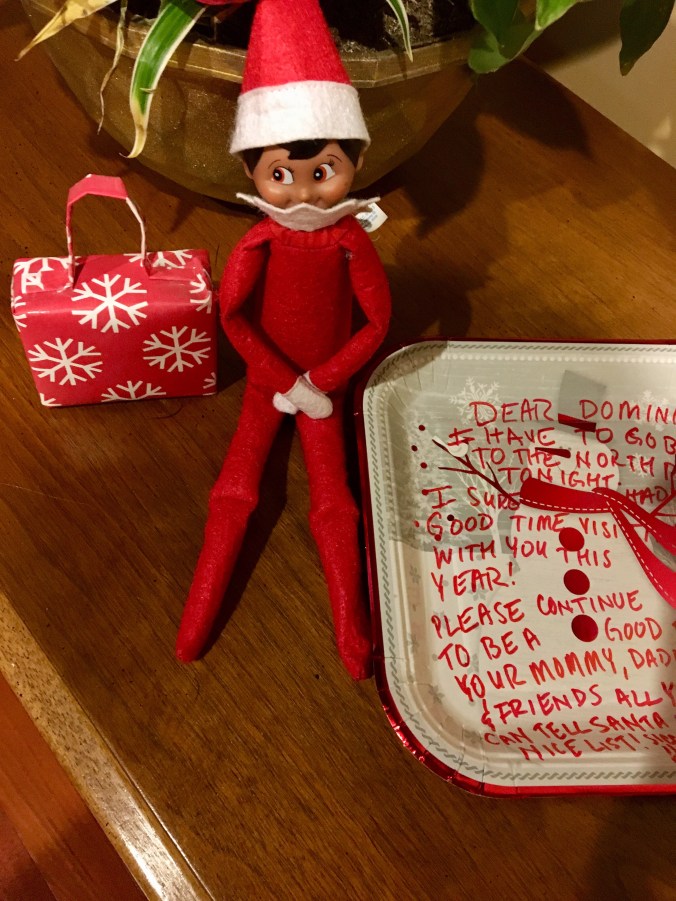
This year I was convinced to start an Elf on the Shelf tradition for our son. It didn’t take much coercion, given that he’s at an age when almost anything can be magical, and the wonder and excitement that he has experienced as he searches for the place where the elf has landed from the North Pole every morning is priceless.

Of course, I realize that this is slowly becoming a part of what his holiday memories will be composed of years to come, along with Polar Express rides and Annual Cookie Decorating Parties with his friends.

What seems to inevitably happen, when discussing this with family and friends, is that we develop a rhythm that we’re not certain we knew we were developing as adults. It seems like one day, we were all younger adults and getting to know future spouses, explaining our memories of the holidays and what was special about what our parents did; the next, we had somehow inadvertently morphed into the adults, creating those memories for our own children. We started adulting, and there was no giant text alert or notification to tell us so!

I fondly remember my Christmas Eve worries…how could I get to sleep? If I didn’t get to sleep, how was the Sandman really gonna get me? (I can thank my older sister for that one.) Would Santa like the cake or cookies I made him? Would I get whatever crucial doll or nerdy gift I had wanted all year? To say I was born a Type A personality would be an understatement :-).

Now I get to see this time of year in a totally different light, through the eyes of my much more relaxed and happy-go-lucky son. Although he will certainly want to make sure that we leave cookies for Santa and that he says goodbye to the Elf tonight, all of the worry and ‘what ifs’ that I had are replaced by his silly, impish dancing and laughing about what he is confident will be a joyful Christmas morning. Which, incidentally, means that I have to stress all night over making it such and making sure we assemble and present everything from Santa in the perfect, memorable fashion!

In talking about holiday memories, my mother quips that she and my Dad loved Christmas and staying up late assembling and “testing” out all of the toys. I think I love hearing those stories because it helps to know that everyone is truly a kid at heart (and I use the word ‘kid’ cautiously, knowing my Dad is looking down and shaking his head; “kids are baby goats, Gina; use ‘children’ for people”.) And, not surprisingly, my Santa Dad did a good job of putting away any Christmas treats we baked for him!

So, tonight as we all stay up late quietly and secretly assembling and adulting for our childrens’ Christmas morning delights, I hope we all get the opportunity to soak it all in…the memories being created, the traditions slowly being solidified, and the moments that are truly priceless for children of all ages.